Skip to content

Speech Pathology

Helping kids find their voice, their way.

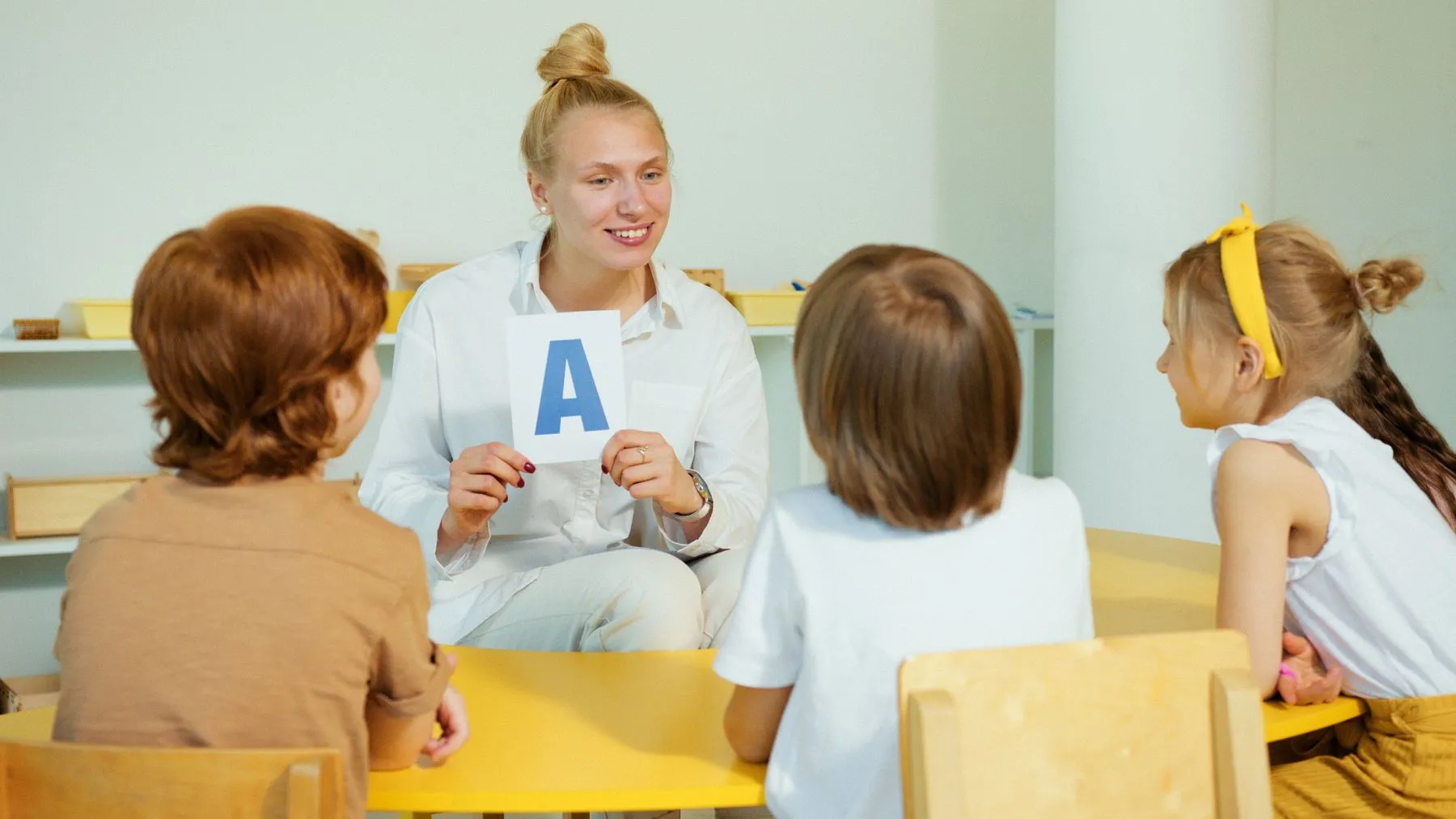
Speech Pathologist holding up a letter card for a small group of children

Communication is so much more than talking.

It is how we tell someone what we want, share an idea, say no, make a joke, ask for help, connect with a friend, tell a story, show how we feel and let people know what matters to us.

At Wild Kids, we believe every child deserves a way to communicate that works for them.

For some children, that might mean spoken words. For others, it might be signs, gestures, pictures, writing, a communication device, or a combination of different ways of communicating.

Our Speech Pathologists work alongside children, families and their support networks to understand how each child communicates, what is making communication tricky and what can help them participate more confidently in everyday life.

Because communication isn't about making every child communicate the same way.

It's about helping every child be heard.

What can a Speech Pathologist help with?

Our Speech Pathologists support children and adolescents with a wide range of communication needs, including:

  • Functional communication
  • Speech sounds, articulation and phonology
  • Understanding words, sentences, questions and information
  • Using words, sentences and stories to express ideas
  • Social communication and interaction
  • AAC and complex communication needs
  • Literacy-related communication skills
  • Childhood apraxia of speech
  • Feeding and fussy eating, where appropriate to the clinician's scope

We don't start with a list of things a child "can't do".

We start with the child.

Their strengths. Their interests. Their communication. Their environment. Their people. Their goals.

Then we work out where Speech Pathology can make a meaningful difference.
What does Speech Pathology look like at Wild Kids?

There is no one Wild Kids Speech Pathology session.

A session might involve a board game, building something, drawing, craft, movement, books, pretend play, conversation, technology or an AAC device. It might be loud and energetic, quiet and focused, or somewhere in between.

The activity is not the goal. The activity is the opportunity to work on something that matters.

We use purposeful, meaningful experiences to build communication skills while following the child's interests and creating genuine opportunities to communicate.

And we don't want the skills to stay in the therapy room.

Our Speech Pathologists work with children, families and, where appropriate, teachers, educators and support workers to help communication skills become useful across home, school, community and everyday life.

Communication comes first

Being able to communicate is about much more than speaking clearly.

A child might communicate using speech, gestures, facial expressions, signs, pictures, writing, a communication book or an AAC device. They might use several of these depending on where they are, who they are with or what they are trying to communicate.

We support children to communicate in ways that are functional, meaningful and accessible to them.

That might mean learning to say:

  • "Help me."
  • "I don't want that."
  • "It's tricky."
  • "Look at this!"
  • "I need a break."
  • "My turn."

Or simply having a reliable way to say what they need without having to rely on someone else guessing.

Communication gives children choices, connection and a voice.

Speech sounds

Some children know exactly what they want to say but find it difficult to make the sounds clearly.

Our Speech Pathologists can assess speech sound development, including articulation and phonological patterns, and work out what type of support may be helpful.

Therapy might focus on developing new speech sounds, changing sound patterns, improving intelligibility or supporting a child to be understood more easily by the people around them.

We keep speech therapy purposeful and connected to real communication, rather than practising sounds just for the sake of practising them.

Understanding and using language

Language helps us understand the world and share what's going on inside our heads.

Some children find it difficult to understand instructions, questions, concepts or information. Others may know what they want to say but find it difficult to find the words, put sentences together, explain an idea or tell a story.

Speech Pathology can support:

  • Understanding language and following instructions
  • Building vocabulary and concepts
  • Answering and asking questions
  • Using sentences to express ideas
  • Describing and explaining
  • Telling and retelling stories
  • Sequencing events
  • Understanding and using more complex language

We look at what language skills are important for that child, in their actual life, rather than working towards language skills in isolation.

Social communication

Communication happens between people.

It can involve taking turns, sharing attention, starting or joining an interaction, understanding what is happening around us, expressing our thoughts and feelings, navigating conversations and finding ways to connect with other people.

Our Speech Pathologists can support children with social communication while respecting their individual communication style.

We don't expect every child to behave or communicate in exactly the same way.

Instead, we focus on helping children develop the skills, strategies and supports they need to connect, participate and communicate authentically.

AAC and complex communication

Some children need more than spoken language to communicate.

Augmentative and Alternative Communication, or AAC, includes communication methods that supplement or replace speech. This can include:

  • Key word signs
  • Gestures
  • Low-tech communication boards
  • Picture-based communication
  • Communication books
  • Speech-generating devices
  • AAC apps and systems

Our Speech Pathologists can help families and support teams explore AAC, develop functional communication systems and learn how to use them consistently across everyday environments.

AAC isn't something a child has to "earn" by developing their speech first.

Communication comes first.

What happens at a Speech Pathology appointment?

Every child is different, so every appointment looks a little different too.

Depending on your child's needs, an appointment might include:

  1. 01Getting to know your child and what matters to your family
  2. 02Talking about strengths, concerns and everyday communication
  3. 03Play and observation
  4. 04Formal or informal assessment
  5. 05Communication activities
  6. 06Speech sound activities
  7. 07Books, stories and conversation
  8. 08AAC exploration and modelling
  9. 09Movement, games or creative activities
  10. 10Parent or caregiver coaching
  11. 11Planning practical strategies for home, school or community

And if talking isn't the best way for your child to show what they know, that's okay.

They might communicate through pointing, drawing, writing, signs, facial expressions, gestures, pictures or AAC.

We meet children where they are and build from there.

Working with families

We don't believe therapy happens only between a therapist and a child.

Families know their child best, so we want to understand what is happening at home, what matters to your family and what you would like to see change.

We work together to find realistic ways to support communication through everyday routines, play and participation.

Sometimes that means giving you a strategy to try. Sometimes it means changing the environment. Sometimes it means introducing a new communication system. And sometimes it means taking a step back and asking: "What if we looked at this differently?"

Children laughing together at a table during a session

Speech Pathology FAQs

What does a paediatric Speech Pathologist do?

A paediatric Speech Pathologist supports children and adolescents with communication and feeding and eating needs.

This can include functional communication, speech sounds, understanding and using language, social communication, literacy-related communication skills and AAC.

At Wild Kids, we look at how communication affects a child's everyday participation and work with families to find practical ways to support them.

Does my child need to be talking to see a Speech Pathologist?

No. Speech Pathology is about communication, not just talking.

Children can communicate through gestures, facial expressions, signs, pictures, writing, communication boards, AAC devices and many other methods.

Our goal is to help your child have a reliable and meaningful way to communicate.

Can Speech Pathology help with speech sounds?

Yes. Speech Pathologists can assess articulation, phonology and other speech sound difficulties and determine what type of support may be appropriate.

We look at how your child is producing sounds, how easily other people understand them and how their speech difficulties are affecting everyday communication.

Can Speech Pathology help my child understand instructions?

Yes. Some children find it difficult to understand words, sentences, questions, concepts or instructions. This can be related to receptive language.

A Speech Pathologist can assess your child's understanding and recommend strategies and supports based on their individual communication profile.

Can Speech Pathology help with social communication?

Yes. Social communication can include things like joining an interaction, sharing attention, taking turns, having conversations, understanding what is happening in a social situation and communicating with other people. Support is individualised and focuses on helping your child connect and participate while respecting their own communication style.

What is AAC?

AAC stands for Augmentative and Alternative Communication.

It includes ways of communicating that supplement or replace speech. This might include signs, gestures, picture systems, communication books or speech-generating devices. AAC can be used by children who are nonspeaking, have limited spoken language or benefit from additional communication support alongside speech.

What happens in my child's first Speech Pathology appointment?

Your first appointment is an opportunity for your Speech Pathologist to get to know your child and your family. We'll talk about your concerns, your child's strengths, communication, interests and everyday routines. Depending on the reason for referral, the appointment may include observation, play, discussion or assessment activities. We'll then work with you to understand what support may be useful and what the next steps could look like.

How long will my child need Speech Pathology?

There isn't a set timeframe. Some children may need an assessment and recommendations, while others benefit from ongoing therapy or a period of parent or team coaching. The right amount of support depends on your child's goals, needs, progress and opportunities to use their skills in everyday life. We'll regularly check in on whether Speech Pathology is still useful and what type of support makes the most sense.

Do I need a referral for Speech Pathology?

No referral is required to contact Wild Kids for private Speech Pathology.

A referral may be required for some Medicare-funded pathways, so it's important to check the requirements of the relevant funding pathway before your appointment.

Can my child use a recent assessment from another provider?

If your child has had a relevant assessment within the previous 12 months, we will generally try to use the existing information where it is clinically appropriate. We'll need a copy of the report so your Speech Pathologist can review the information and determine whether any additional assessment is needed. We don't believe children should have to repeat assessments simply because they have changed providers.

Getting started

Wild Kids currently operates a waitlist for some services. Contact our team or complete the online waitlist form and we will let you know the next steps.